
• Welcome to For E Bodies Only !

    We are a community of Plymouth Cuda and Dodge Challenger owners. Join now! Its Free!

73 Cuda fuel sender return port

gman72

Member
Joined
Feb 16, 2026
Messages
13
Reaction score
8
Location
Bayville, NY
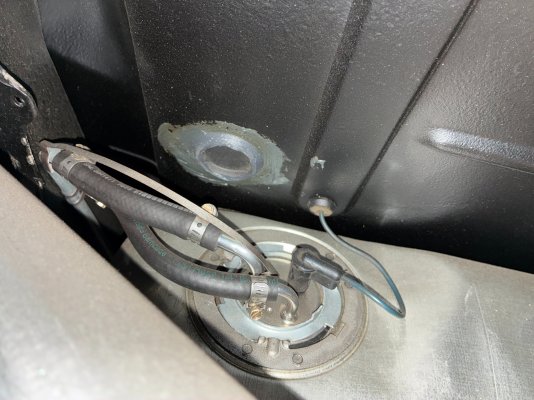
Ok I am a new member with zero experience on Barracudas. So forgive me if my questions are basic or just plain dumb. Although my wife would tell you dumb questions from me are somewhat expected. I have a 1973 Barracuda 340, automatic. I just got it about a week ago. My fuel sender has 2 ports. The fuel delivery port going to the pump, and what looks to be a return line. The return line is not connected to anything. Imagine my surprise the first time I tried to pump it full of gas and my fuel return line started to relieve itself all over the ground at the gas station. Fire departments and hazmat units were called and were crawling all over the place.
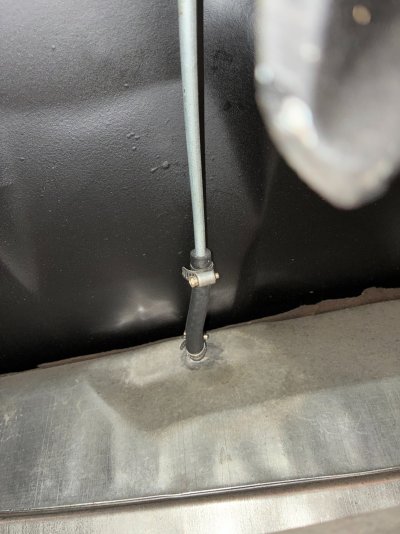
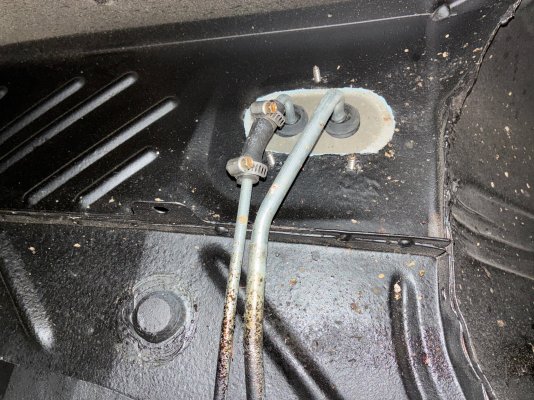
I also have a vapor liquid separator. The 4 lines that are supposed to go to the tank have nowhere to connect. The tank is lacking the ports. The 5th line from the vapor liquid separator is run to the front of the car and is not connected to anything.
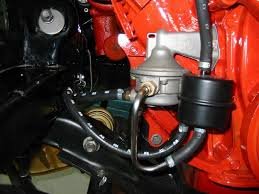
I have attached pics of this. I know we touched upon this on my welcome wagon thread, but I figured I would ask more questions on a new thread. Also I am not looking for this to be a concourse car. I just want a safe car to drive and enjoy. Some spirited driving may be occur as well. Now for some questions.
1) Where does the return line to the sender connect to? Does it connect to the manifold, or the breather cap with the 3 ports. Or should I just block it off? (I got the car without any hoses connected to the breather cap)
2) Since my tank is not from a 73 and has no ports to hookup the vapor liquid separator, will that be a problem if it is left unconnected? Can I use the line in my engine bay to hook up to the fuel sender port?
3) I am going to replace the rubber fuel line shown in the pic with the alternator I put an arrow pointing to it. Is that line run correctly? The oil dipstick is right up against it and whenever I pull out the dipstick I hit into the fuel line. And can anyone point me in the right direction for the proper fuel filter that comes after the pump?
thanks.

20260216_204034.jpg


20260219_190048.jpg


20260217_200541.jpg
 
I recommend you seek a 1973 Factory Service Manual. Most of this stuff is covered in those manuals. There are PDFs out there, for free, one can find with a little searching. Even a 1970 or 72 manual will be a tremendous help to your work.

Collecting the Dealer Parts Books, also in PDF for free, will prove useful to understand which parts were available to which year cars.

These two sets of documents are essential for those wishing to understand and restore their Mopars. As these cars get more rare, we have fewer of them to compare with, and learn by. As time passes, they get changed and screwed with more and more by people, making it harder to know what is "factory original", correct, and what is aftermarket, or poorly repaired.

The fuel delivery port going to the pump, and what looks to be a return line. The return line is not connected to anything.

You may be able to cap the "sending unit return" fitting, temporarily, until you sort out these details. It's sort of optional, in most cases.
1771567399186.png


The 440 and 426 cars, the bigger engine offerings at the time, can run hot when driven aggressively, and cause a vapor-lock problem with the fuel in the engine compartment. These often had this extra thing-deal, Fuel Vapor Separator. It was located between the fuel pump and the carburetor(s). A third fitting, the "return tube" in Figure 9, connected to a hard line low in the engine compartment, that fed all way back to the sending unit, and connected to the "fuel return line" at the sending unit.

A side note, the fuel sending unit with the return line (440 & 426 Hemi cars) has a slightly fatter fuel line, 3/8 instead of the typical 5/16 fuel line found on the majority of other Mopar. This fatter fuel line was desired by performance enthusiasts. It appears you have the sending unit from one of those big-block cars. To make this fully functional, you'll need that extra hard line from the engine bay to the fuel tank, and a few other missing parts. Until you do, you can cap off the return line at the tank.

I also have a vapor liquid separator. The 4 lines that are supposed to go to the tank have nowhere to connect. The tank is lacking the ports.

1771566380435.png


In 1970, they were just starting to make changes in the year for smog-related issues. The ECS (evaporative control system) was optional in 1970, but by 1971 forward, is was mandatory. Fuel tanks with ECS contain the vent lines that connect with the separator in the trunk. FYI, in the image of your sending unit, I think I see the 4 vapor lines to the left of the photo. The way they are bent, makes me think they are indeed connected to fittings on the tank. I invite you to confirm.

2) Since my tank is not from a 73 and has no ports to hookup the vapor liquid separator, will that be a problem if it is left unconnected? Can I use the line in my engine bay to hook up to the fuel sender port?

If you don't have fittings for the ECS vents on the tank, you may have a 1970 tank from a car without ECS. It is NOT essential you have the liquid vapor separator correctly installed to operate the vehicle. The closed (non-ECS) systems require a different fuel cap, because they did not have these vents. But the type of gas cap your car will accept is effected by the filler tube installed. The caps tended to vary from 1970-72, as did the filler tubes. I believe the 72+ caps are all the same.

1) Where does the return line to the sender connect to? Does it connect to the manifold, or the breather cap with the 3 ports. Or should I just block it off? (I got the car without any hoses connected to the breather cap)

The "fuel return line" you show pictured in your engine compartment is likely the vapor return line, that connects between the three-nipple "crankcase air cleaner" and the "vapor-liquid separator" in the diagram.

And can anyone point me in the right direction for the proper fuel filter that comes after the pump?

This is a common generic maintenance item. As far as I know, there is no "factory correct" fuel filter in this scenario. You can ask at your local auto parts store for a recommendation, but as long as it fits the rubber hoses, you may be good to go.

If you do indeed have a 1970 tank, and could find a used "swap meet" fuel tank, with a (non-440) sending unit, from the years 1971-74, your life may be simpler by installing it, with the 5/16 fuel line (without return), and hooking all the stuff back up like original.

You may be able to unbolt the alternator, and route the fuel line behind the bracket(s) to make access to the dip stick a little easier.
 
Last edited:
As pschlosser noted in the attached diagram, Evaporation Control System (previous post) 71's vented differently from what yours may have started life as. I had that system in my 71 and early 72. This version is also in my current car - see picture. These tanks use the 4 vent tubes from the side. For others interested, there are also two sheet metal plates that go between the tank and vent to protect the rubber lines from stones.
Later in 72 they changed over to the system that appears to have been installed in your car. That system has the vapor separator mounted "above" the axle near the exhaust hanger locations as seen in your pictures. From what appears to be late 72 to 74, those tanks have the four vapor tubes exiting the tank, towards the front of the car. I had your system in my later year 72. I don't know what month Mopar changed over systems. I'm sure they had parts to exhaust from the 71 model year. A lot of things happened in 71 to mess with production. Add to that, 72 had low sales volumes.
Short Term solutions:
MY STRONG recommendation would be: DO NOT just plug this tube. Fuel expands when heated. Just going from the station's tank in the ground to your car's fuel tank will cause expansion. That fuel vapor and possibly liquid needs someplace to expand to. Maybe if you research the 70 cuda solution for tank venting could be done. I don't think I'm down for using a cap vent.
The picture I provided from your welcome site shows the charcoal canister, that was a part of your 72 at one point. That's where the tube went to and is why you have a "hole" in that location under your hood. That the canister's home ⛳. Get another canister, if you can, would be my recommendation. That way the lines can be properly routed to your breather / intake at least from it. At bare minimum, connect that line to your tank's vent for a starter and keep the tube higher than your tank. I wouldn't connect it directly to the intake as it can pull fuel through your vent and I would also not directly connect it to your valve cover vent. You don't need your engine block full of fuel vapors or worse.
Long term:
Get the correct tank, replacement vapor separator and charcoal filter for your car.

72 Trunk Vent.jpg
 
The pipe on the fuel sender/pickup is for liquid fuel to return to the fuel tank and has a separate line running back down the car.
These cars had 3 lines fitted at the factory. 1 for fuel to the pump, 1 liquid return line and 1 for the tank vent system.
As your car is 1972 and the high performance engines like the 426 were gone by 1972 your car probably has only 2 lines - 1 for fuel pump and 1 for tank vent system.
It was not originally designed as a vent - though you will need to vent the fuel tank somehow.
The venting system is separate to this.
 
Last edited:
I recommend you seek a 1974 Factory Service Manual. Most of this stuff is covered in those manuals. There are PDFs out there, for free, one can find with a little searching. I have NOT seen the precise 1974 one on PDF for free, but I HAVE found many of the 1970-73 manuals. Even a 1972 or 73 manual will be a tremendous help to your work. The number of changes from 1973 to 74 were small, and many aspects of the two were identical.

Collecting the Dealer Parts Books, also in PDF for free, will prove useful to understand which parts were available to which year cars.

These two sets of documents are essential for those wishing to understand and restore their Mopars. As these cars get more rare, we have fewer of them to compare with, and learn by. As time passes, they get changed and screwed with more and more by people, making it harder to know what is "factory original", correct, and what is aftermarket, or poorly repaired.


You may be able to cap the "sending unit return" fitting, temporarily, until you sort out these details. It's sort of optional, in most cases.
View attachment 151204

The 440 and 426 cars, the bigger engine offerings at the time, can run hot when driven aggressively, and cause a vapor-lock problem with the fuel in the engine compartment. These often had this extra thing-deal, Fuel Vapor Separator. It was located between the fuel pump and the carburetor(s). A third fitting, the "return tube" in Figure 9, connected to a hard line low in the engine compartment, that fed all way back to the sending unit, and connected to the "fuel return line" at the sending unit.

A side note, the fuel sending unit with the return line (440 & 426 Hemi cars) has a slightly fatter fuel line, 3/8 instead of the typical 5/16 fuel line found on the majority of other Mopar. This fatter fuel line was desired by performance enthusiasts. It appears you have the sending unit from one of those big-block cars. To make this fully functional, you'll need that extra hard line from the engine bay to the fuel tank, and a few other missing parts. Until you do, you can cap off the return line at the tank.


View attachment 151203

In 1970, they were just starting to make changes in the year for smog-related issues. The ECS (evaporative control system) was optional in 1970, but by 1971 forward, is was mandatory. Fuel tanks with ECS contain the vent lines that connect with the separator in the trunk. FYI, in the image of your sending unit, I think I see the 4 vapor lines to the left of the photo. The way they are bent, makes me think they are indeed connected to fittings on the tank. I invite you to confirm.


If you don't have fittings for the ECS vents on the tank, you may have a 1970 tank from a car without ECS. It is NOT essential you have the liquid vapor separator correctly installed to operate the vehicle. The closed (non-ECS) systems require a different fuel cap, because they did not have these vents. But the type of gas cap your car will accept is effected by the filler tube installed. The caps tended to vary from 1970-72, as did the filler tubes. I believe the 72+ caps are all the same.


The "fuel return line" you show pictured in your engine compartment is likely the vapor return line, that connects between the three-nipple "crankcase air cleaner" and the "vapor-liquid separator" in the diagram.


This is a common generic maintenance item. As far as I know, there is no "factory correct" fuel filter in this scenario. You can ask at your local auto parts store for a recommendation, but as long as it fits the rubber hoses, you may be good to go.

If you do indeed have a 1970 tank, and could find a used "swap meet" fuel tank, with a (non-440) sending unit, from the years 1971-74, your life may be simpler by installing it, with the 5/16 fuel line (without return), and hooking all the stuff back up like original.

You may be able to unbolt the alternator, and route the fuel line behind the bracket(s) to make access to the dip stick a little easier.
Lot's of great info in your post. Also a bit of a history lesson. I definitely need to get the service manual! It seems I need to figure out what tank I have to solve some problems. how is it "vented"? Thanks for all the great material.
 
As pschlosser noted in the attached diagram, Evaporation Control System (previous post) 71's vented differently from what yours may have started life as. I had that system in my 71 and early 72. This version is also in my current car - see picture. These tanks use the 4 vent tubes from the side. For others interested, there are also two sheet metal plates that go between the tank and vent to protect the rubber lines from stones.
Later in 72 they changed over to the system that appears to have been installed in your car. That system has the vapor separator mounted "above" the axle near the exhaust hanger locations as seen in your pictures. From what appears to be late 72 to 74, those tanks have the four vapor tubes exiting the tank, towards the front of the car. I had your system in my later year 72. I don't know what month Mopar changed over systems. I'm sure they had parts to exhaust from the 71 model year. A lot of things happened in 71 to mess with production. Add to that, 72 had low sales volumes.
Short Term solutions:
MY STRONG recommendation would be: DO NOT just plug this tube. Fuel expands when heated. Just going from the station's tank in the ground to your car's fuel tank will cause expansion. That fuel vapor and possibly liquid needs someplace to expand to. Maybe if you research the 70 cuda solution for tank venting could be done. I don't think I'm down for using a cap vent.
The picture I provided from your welcome site shows the charcoal canister, that was a part of your 72 at one point. That's where the tube went to and is why you have a "hole" in that location under your hood. That the canister's home ⛳. Get another canister, if you can, would be my recommendation. That way the lines can be properly routed to your breather / intake at least from it. At bare minimum, connect that line to your tank's vent for a starter and keep the tube higher than your tank. I wouldn't connect it directly to the intake as it can pull fuel through your vent and I would also not directly connect it to your valve cover vent. You don't need your engine block full of fuel vapors or worse.
Long term:
Get the correct tank, replacement vapor separator and charcoal filter for your car.

View attachment 151209
Yes, you recommended looking at the side of the tank to see if there are any vent tubes in my welcome post. I have not had a chance to check it out. If it does in fact have those vents I can hook up the Vapor Liquid Separator(Can I start calling the the VLS? Too much typing!) then I guess it wouldn't be a big problem if I plugged the extra port at the fuel sender and have to rely on a "vented" cap. There would be somewhere for the fuel expansion to go. At that point I can get a charcoal canister and hook it all up! Thank you for the info.
 
The pipe on the fuel sender/pickup is for liquid fuel to return to the fuel tank and has a separate line running back down the car.
These cars had 3 lines fitted at the factory. 1 for fuel to the pump, 1 liquid return line and 1 for the tank vent system.
As your car is 1972 and the high performance engines like the 426 were gone by 1972 your car probably has only 2 lines - 1 for fuel pump and 1 for tank vent system.
It was not originally designed as a vent - though you will need to vent the fuel tank somehow.
The venting system is separate to this.
Yes, my car has 2 lines. (it is a 73) but the fuel system might not be a 73. At this point I don't know. LOL. So if there are no holes in my tank too hook up the VLS can the fuel sender port be used as a vent? The PO didn't have anything hooked up to that line and likely only filled his tank 1/2 way. That port wouldn't be submerged at that point and it would act as a vent.
 
Since you are missing the charcoal canister and you are not going for a contours restoration, I would eliminate it all together.

I have converted my 318 73 from the vapor/return system to 440 with the return line to the tank with the vent lines that go into the trunk and route back into the rear frame rail. I never liked the look of the charcoal canister in the engine compartment with all of the lines. Besides the 6brrl setup does not have provisions for the charcoal canister anyways.

Does your tank have a tube/port on the passenger side just above the pinch weld? If so that is the return port. If you have the port on the passenger side of the tank, I would buy a new sending unit without the return line. That would probably be cheaper than a charcoal canister and if the carburetor was changed, you may not be able to connect to the charcoal canister anyways.

If your tank does not have the return tube/port you could bring your tank to a radiator shop and they could possibly install one. They can braise it in place and is probably cheaper that buying a new tank. There is a guy local to me that re-cores radiators for people with older cars like ours so you might have someone in your area that does the same.

I don't think you can use the port/tube on the sending unit as just a return/vent like I have done. Without the charcoal canister and 4 connections to the tank from the small 4 connection tank that is higher than the tank, I think you would have fuel leaking anytime you filled about 1/2 tank.

I will post some pictures when I get home from work today of the tube/port location and the vent return in the trunk etc. You may be able to do the same as what I did.
 
Just to clarify.
The three lines I mention are hard pipe lines that run under the car from the engine bay to the rear of the car - not a 3 nipple fuel sender/pickup.
Your sender is likely to have been only one pipe originally and if the tank does not have the 4 vent nipples it is also wrong. Wrong year parts fitted by previous owner.
The second pipe on your sender can be blocked no problem. It is not suitable as a vent because raw fuel is sloshing around when you drive and I would say if you use it as a vent the car will stink of raw fuel and may be a fire hazard.
 
Since you are missing the charcoal canister and you are not going for a contours restoration, I would eliminate it all together.

I have converted my 318 73 from the vapor/return system to 440 with the return line to the tank with the vent lines that go into the trunk and route back into the rear frame rail. I never liked the look of the charcoal canister in the engine compartment with all of the lines. Besides the 6brrl setup does not have provisions for the charcoal canister anyways.

Does your tank have a tube/port on the passenger side just above the pinch weld? If so that is the return port. If you have the port on the passenger side of the tank, I would buy a new sending unit without the return line. That would probably be cheaper than a charcoal canister and if the carburetor was changed, you may not be able to connect to the charcoal canister anyways.

If your tank does not have the return tube/port you could bring your tank to a radiator shop and they could possibly install one. They can braise it in place and is probably cheaper that buying a new tank. There is a guy local to me that re-cores radiators for people with older cars like ours so you might have someone in your area that does the same.

I don't think you can use the port/tube on the sending unit as just a return/vent like I have done. Without the charcoal canister and 4 connections to the tank from the small 4 connection tank that is higher than the tank, I think you would have fuel leaking anytime you filled about 1/2 tank.

I will post some pictures when I get home from work today of the tube/port location and the vent return in the trunk etc. You may be able to do the same as what I did.
So to be clear if I have the side vent port on my tank i should vent it through the trunk and into the frame rail?
 
So to be clear if I have the side vent port on my tank i should vent it through the trunk and into the frame rail?
No. :steering:...:)
Speaking for Ronbo, the frame rail is in reference to running the fuel tubing along it back from the motor. By going through the trunk, he's keeping the line higher than the tank.
What Ronbo is likely suggesting, as an option, with a bit of tweaking, is to use that separator (PN: MF284) that I told you about.

My earlier picture shows the device in my trunk that matches Pschlosser's fig 1 drawing. It shows a "see through" of what those four tubes do on the inside, of the pictured silver tube inside my trunk. With a 5th line (like yours) going to my valve cover vent that also looks just like yours. They stopped using this design after April of 72 and went to the smaller one you seem to have.
You really need to know if you have a 70, 71/72 or 72/74 fuel tank in that car.
 
Back
Top