• Welcome to For E Bodies Only !

    We are a community of Plymouth Cuda and Dodge Challenger owners. Join now! Its Free!

FUEL VAPOR SEPERATOR

dennispsalm91

Well-Known Member
Joined
Nov 8, 2023
Messages
84
Reaction score
14
Location
Palm Coast FL
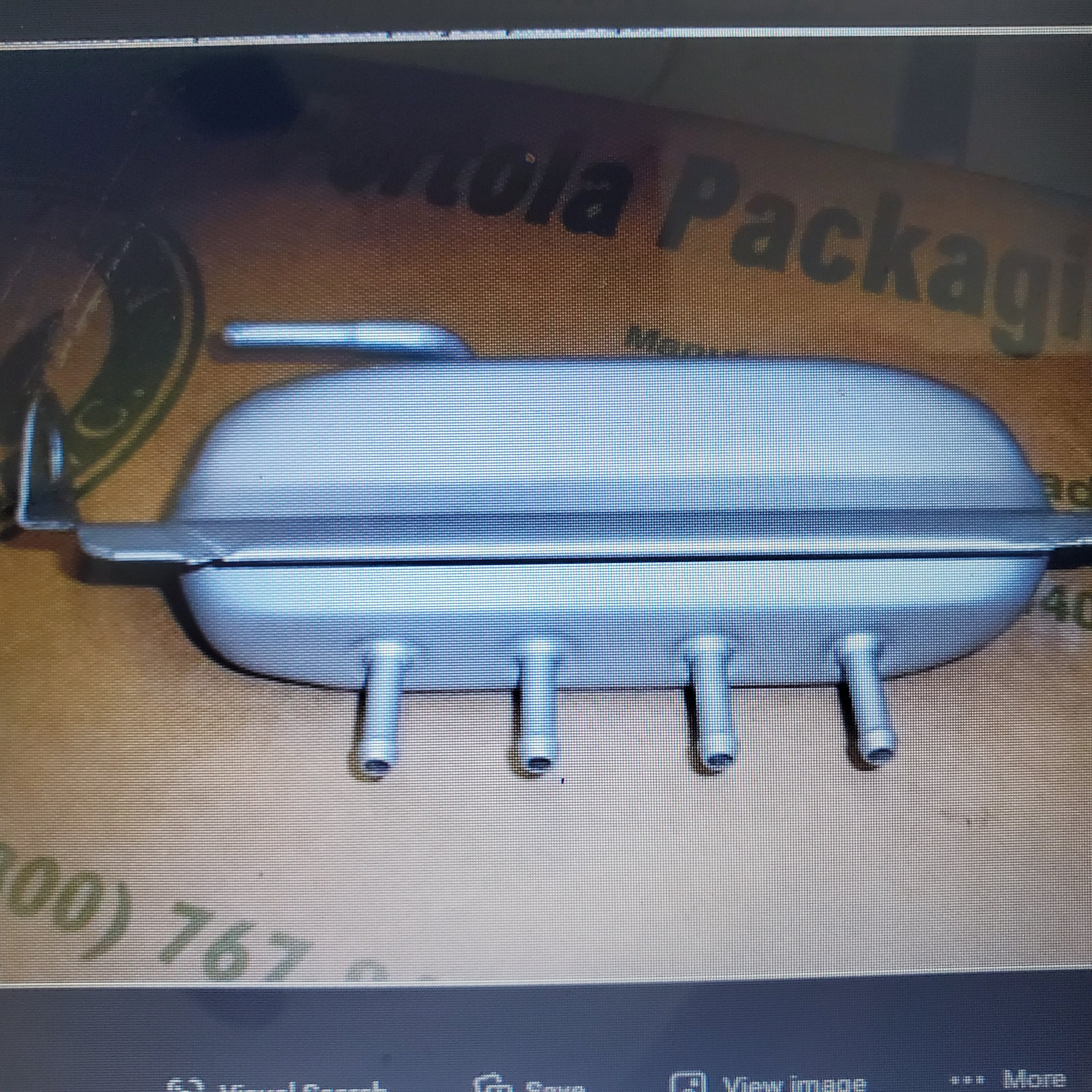
Putting fuel separator in 73 Challenger, is there a way to test it first? On the side where the 4 ports are. I can push or pull air easy. Where the 1 port is it seems hard to push air, but im able to pull air somewhat. It almost seems I can hear like a flap open while pulling?

20260524_151626.jpg
 
Putting fuel separator in 73 Challenger, is there a way to test it first? On the side where the 4 ports are. I can push or pull air easy. Where the 1 port is it seems hard to push air, but im able to pull air somewhat. It almost seems I can hear like a flap open while pulling?

View attachment 154721

The pictured vapor-liquid separator, original Chrysler part number 3642105, houses the four vapor vent lines from the fuel tank mounted internally as stand pipes to allow the vapor entry and liquid fuel separation in the housing. One tube inside the separator does not extend as far into the separator as the other three. The lower tube is the liquid return line to the tank as well as a vapor tube. These four tubes are essentially open and can pass air. The following images shows schematically the inlet tube arrangement:
Screenshot 2026-05-24 5.17.37 PM.png


The separator outlet tube has a brass check valve, called the overfill limiting valve, that connects to the vent line leading to the charcoal canister. The check valve is closed until vapor pressure reaches ~0.5psi. At this pressure point the check valve begins to be pushed up and vapors travel to the charcoal canister to be purged into the carburetor when the engine is running. The following diagram illustrates the check valve assembly:
overfill_valve.png


The tube and valve can pass air outward from the separator, but should block air going into the separator. If the valve moves when the separator is shaken, it is free and should function as intended. The flap-like sound heard when pulling air from the outlet tube sounds like the valve is moving.

The pictured unit appears to possibly be new (originals were galvanized), or refurbished, but if the valve is stuck with fuel varnish or moderate dirt, cleaning by submerging in a solvent such as carburetor cleaner (old Berryman B-12 is ideal) can remove the varnish. Agitating the unit in the solvent can help free up the valve.

If the unit is rusted, or the valve is otherwise stuck, it may not be possible to clean it up. Cutting open the unit for manual cleaning, followed by resealing it is possible. Chrysler service instruction for an inline valve that could not be freed was to cut the tube out and splice in a replacement tube/check valve (part number 3642263). Unfortunately, 3642263 has been long discontinued.


The following diagram illustrates the overall Vapor Saver system, part of the Evaporative Control System (ECS):

1973_separator.png


The pictured vapor-liquid separator, original Chrysler part number 3642105, houses the four vapor vent lines from the fuel tank mounted internally as stand pipes to allow the vapor entry and liquid fuel separation in the housing. One tube inside the separator does not extend as far into the separator as the other three. The lower tube is the liquid return line to the tank as well as a vapor tube. These four tubes are essentially open and can pass air. The following images shows schematically the inlet tube arrangement:
View attachment 154725

The separator outlet tube has a brass check valve, called the overfill limiting valve, that connects to the vent line leading to the charcoal canister. The check valve is closed until vapor pressure reaches ~0.5psi. At this pressure point the check valve begins to be pushed up and vapors travel to the charcoal canister to be purged into the carburetor when the engine is running. The following diagram illustrates the check valve assembly:
overfill_valve.png


The tube and valve can pass air outward from the separator, but should block air going into the separator. If the valve moves when the separator is shaken, it is free and should function as intended. The flap-like sound heard when pulling air from the outlet tube sounds like the valve is moving.

The pictured unit appears to possibly be new (originals were galvanized), or refurbished, but if the valve is stuck with fuel varnish or moderate dirt, cleaning by submerging in a solvent such as carburetor cleaner (old Berryman B-12 is ideal) can remove the varnish. Agitating the unit in the solvent can help free up the valve.

If the unit is rusted, or the valve is otherwise stuck, it may not be possible to clean it up. Cutting open the unit for manual cleaning, followed by resealing it is possible. Chrysler service instruction for an inline valve that could not be freed was to cut the tube out and splice in a replacement tube/check valve (part number 3642263). Unfortunately, 3642263 has been long discontinued.


The following diagram illustrates the overall Vapor Saver system, part of the Evaporative Control System (ECS):

1973_separator.png


Thanks for your post. It makes sense in regard to the check valve. I could hear it opening.
 
Back
Top