

• Welcome to For E Bodies Only !

    We are a community of Plymouth Cuda and Dodge Challenger owners. Join now! Its Free!

2 or 3 speed Wiper Switch?

Oystercopy

Well-Known Member
Joined
Jul 25, 2019
Messages
139
Reaction score
49
Hey Guys,

My wipers have never parked (since the car was restored, I presume) and I've tried grounding the motor, etc with no luck.

My suspicion is that I've got a mismatch between the switch and motor, 2-speed vs 3-speed. I have the elongated wiper (style) motor and not the one where the wires are sticking out of the housing on the face of the motor.

i attached a picture of my motor type. Don't have access to the car at the moment to take a picture of the actual motor, but this is the style I have. I believe this is a 2-speed motor and I might have a 3-speed switch. Not sure if that matters.
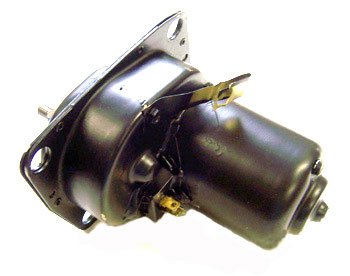
2_speed_windhsield_wiper_mo.jpg
 
That's a 2sp wiper.
Don't remember the exact symptoms, but I had a 2sp motor connected to a 3sp switch when I put in ralley gauges. I believe it was more than just parking, maybe the speeds were wonky. It's been awhile.
You'll need to look at switch to be sure which it is.
Standard or ralley switch panel?
 
A two speed switch will have two definite clicks or positions from off - low and high.
The 1970 - 71 three speed switch has low as a click then it is variable speed. It feels kind of like the instrumant panel dimmer.
It should be fairly easy to work out what you have, or pull out the switch panel and view the part number.
 
For 1970–1974 E-body Mopars, the wiring harness between the firewall and the wiper motor is identical for both 2-speed and 3-speed/variable systems, but the switch internals and connector plugs differ.

Key Wiring and Switch Differences:

Switch Internal Resistance: The primary difference is that 3-speed and variable-speed switches contain DARK BROWN an internal resistor or variable resistor to control speed, whereas the 2-speed switch sends full power to the motor for high speed and routes power through an external ballast resistor mounted on the motor housing for low speed.
Washer Wire: The 3-speed and variable switches include an extra spade terminal for the washer wire, which is absent on the 2-speed switch. On a 2-speed setup, the DARK BROWN wire in the harness is typically connected to nothing or bypassed if using a foot pump.

Connector Plug:
1970–1971: The 2-speed switch uses a two-piece plug, while the 3-speed/variable switch uses a single-piece plug with an additional terminal for the washer function.
1972–1974: The system standardized to a single plug for both configurations, but the 3-speed/variable switch retains the extra terminal for the washer wire.
Wire Functions: Common wires include PINK (power from fuse box), BLUE (parking circuit), brown (washer), RED, GREEN, and BROWN with tracer (low/medium speed). The 2-speed motor relies on the external resistor for the low-speed circuit, while the 3-speed motor uses different wire combinations to achieve high, medium, and low speeds via the switch's internal circuitry.

Note: You cannot simply swap a 2-speed motor with a 3-speed switch (or vice versa) without potential malfunction, as the linkage arms and crank are also different between the two systems.
1782740308355.png
1782751733815.png

Brown wire arriving to the resistor on 2 speeds motors. Solid brown is washer. Labeled as W

P- blue is parking
B- pink is power from fuse box ACC side ( in Run or Acc )
A, F1 and F2... Brown Traced, Red, Dark green are the speeds
W- solid brown, is washer

These will match just to 71 B bodies ( and 70/71 E) but on codes on back of switch. Is the same for all.
 
Last edited:
Back
Top