
I have been to three different places trying to get a wheel alignment on my '70 cuda, and no one seems to know how to get it into specs. I have spent 9 hours in three different shops, and each place eventually gives up and says sorry, we can't do it. Does anyone know of a reputable shop in the Tampa area that knows how to work on these cars?

You are using an out of date browser. It may not display this or other websites correctly.
You should upgrade or use an alternative browser.
You should upgrade or use an alternative browser.
Problem getting wheel alignment on 1970 cuda
- Thread starter Raycuda
- Start date

Katfish
Well-Known Member
Did they say specifically what the issue is?
What couldn't they do?
What couldn't they do?
I honestly think that they are thoroughly confused with the suspension setups of these old MOPARS. They just said they can't get it into specs.Did they say specifically what the issue is?
What couldn't they do?
Chryco Psycho
Well-Known Member
I just do them myself , turn the front upper control are eccentric all the way out & the rear all the way inward , using a digital level or your smart phone adjust the upper control arm until you have 1/2 * of neg camber & set the toe in 1/16 using a tape measure
Did you give them specs to use or trust them to find the specs?
I've heard of shops saying this because old cars aren't in their "toe-n-go" database. Which also highlights the fact that if they can't align it by twisting a single rod end, they may be claiming they can't get spec because it actually require analysis of what they are doing.
Try doing it yourself as Chryco suggested. Or, ask around at the next car show to see who others are using.
I've heard of shops saying this because old cars aren't in their "toe-n-go" database. Which also highlights the fact that if they can't align it by twisting a single rod end, they may be claiming they can't get spec because it actually require analysis of what they are doing.
Try doing it yourself as Chryco suggested. Or, ask around at the next car show to see who others are using.

Xcudame
Well-Known Member
Find a shop with an old guy 60+ if you can. Buy him a twelve pack of fifth of his favorite brand and you'll be amazed what he can do for you!

Challenger RTA
Well-Known Member
Not that this your problem but check it. Front set back is a measurement referencing a vehicle’s front wheels to a line running perpendicular to the vehicle center line and parallel to a line drawn through the centers of the spindle. If a vehicle has front set back, one front tire/wheel assembly sits farther back from this imaginary reference line than the other. Positive set back indicates that the right front wheel is set back further than the left. Negative set back indicates the left front wheel is further back than the right. Setback should usually be zero to less than half a degree, but some vehicles have asymmetrical suspensions by design. Front set back can be checked during a normal alignment and is used to diagnose collision damage or cradle misaligned , bent strut rod . If the cradle is adjusted incorrectly or damage is present, it’s not unusual to also see a reduced positive caster reading on the side with set back. Excessive set back can cause an alignment pull to the side with set back. 2nd and 3rd is 3/8" strong the way it was measured. pass side shorter. side longer.


Challenger RTA
Well-Known Member
Here is information from a manufacture of frame equipment.
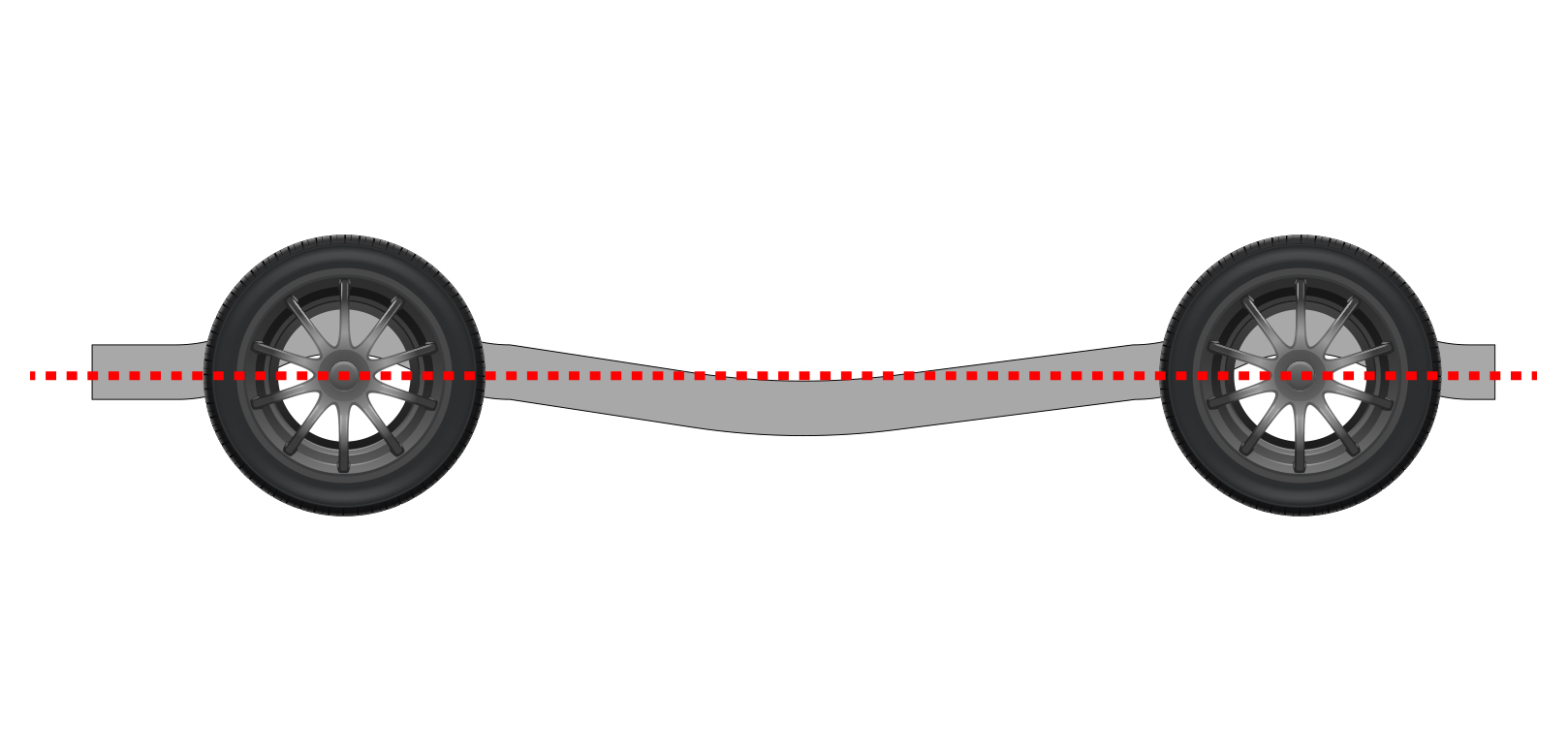
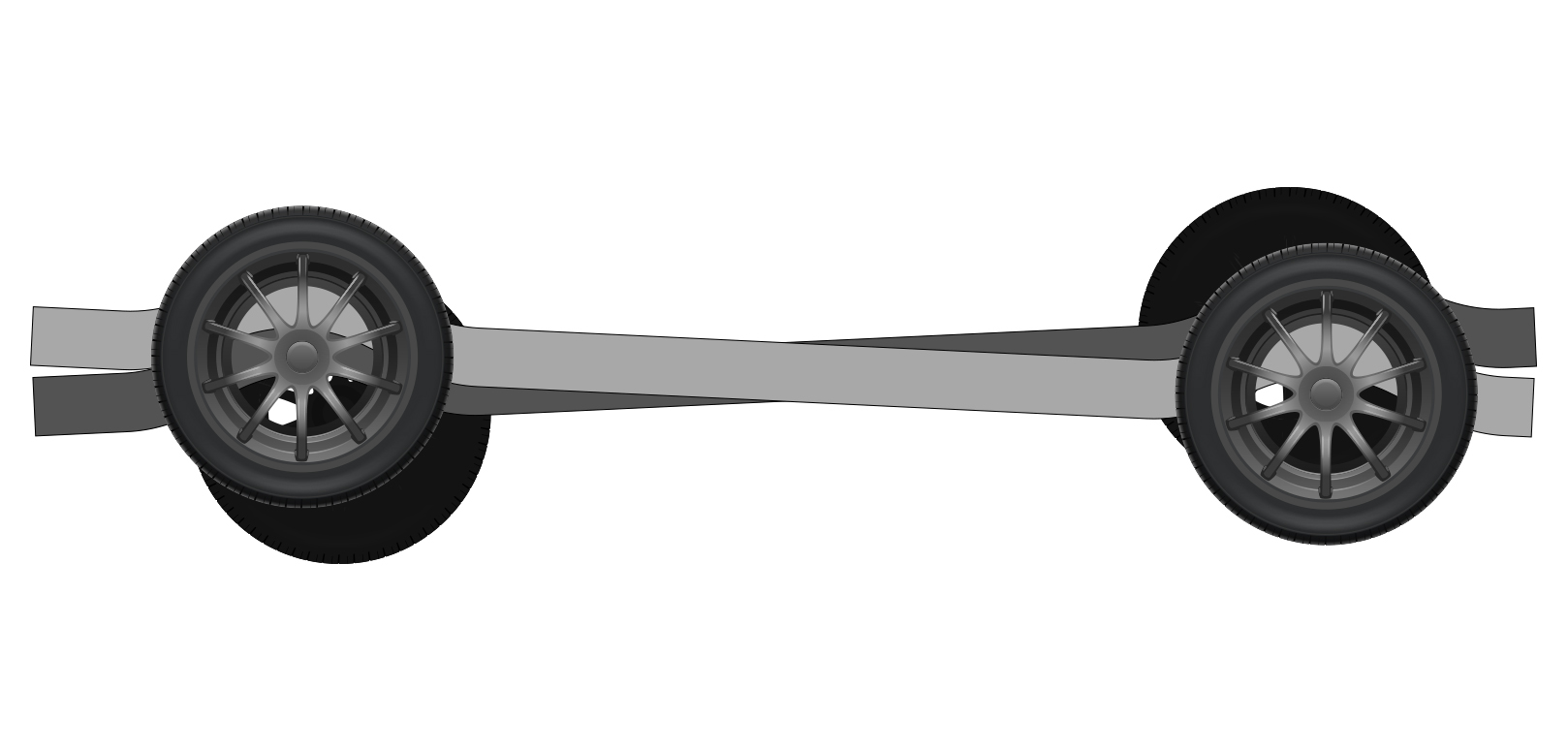
Sagging or Twisted Frame: Look out for gaps in the body, as uneven parts in the build of a car frame can cause sections of the vehicle to lean. If left unattended, these gaps can lead to faster tire and coil wear. Frame straighteners effectively fix minor frame damage using a leverage process.
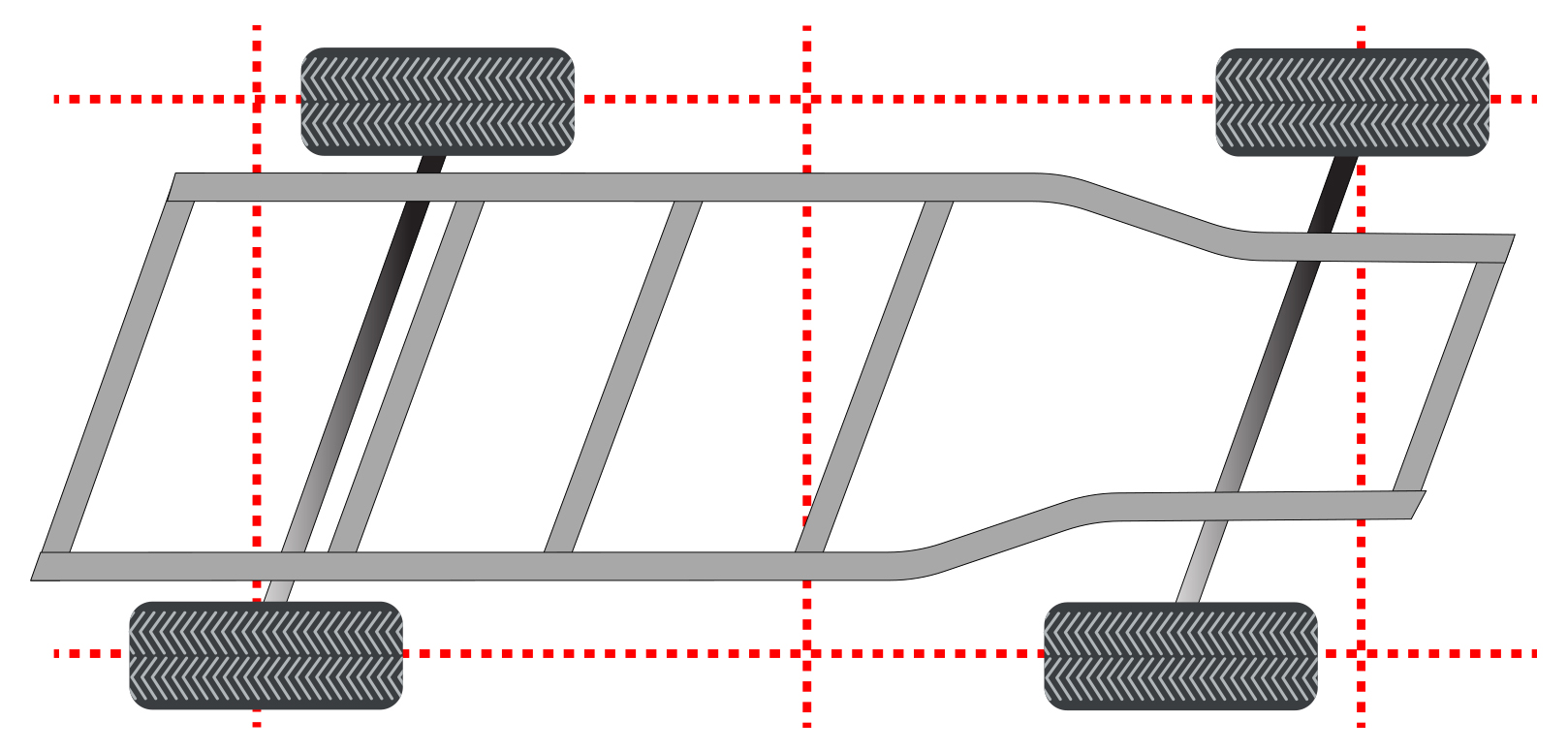
Diamond Frame Misalignment: In a straight frame, when the center box is measured diagonally, the measurements are equal, forming a perfect square, which ensures precise mounting for the suspension. However, if one frame rail is pushed out of position, either forward or backward, the center box becomes distorted. This causes the diagonal measurement to become uneven, resembling the shape of a diamond. As a result, the suspension is affected, and frames with a diamond shape often exhibit the characteristic "dog tracking," where they appear to travel down the road at an angle. It is rare to find a pure diamond shape without other damage. Additionally, when frame rails move forward or backward, they typically deviate from being parallel to the road surface.
Sway Damage: Sway damage causes the vehicle to lean to one side, impacting steering and overall vehicle performance. Our frame straightening process corrects the sway, eliminating vibrations and ensuring a safe and comfortable ride.
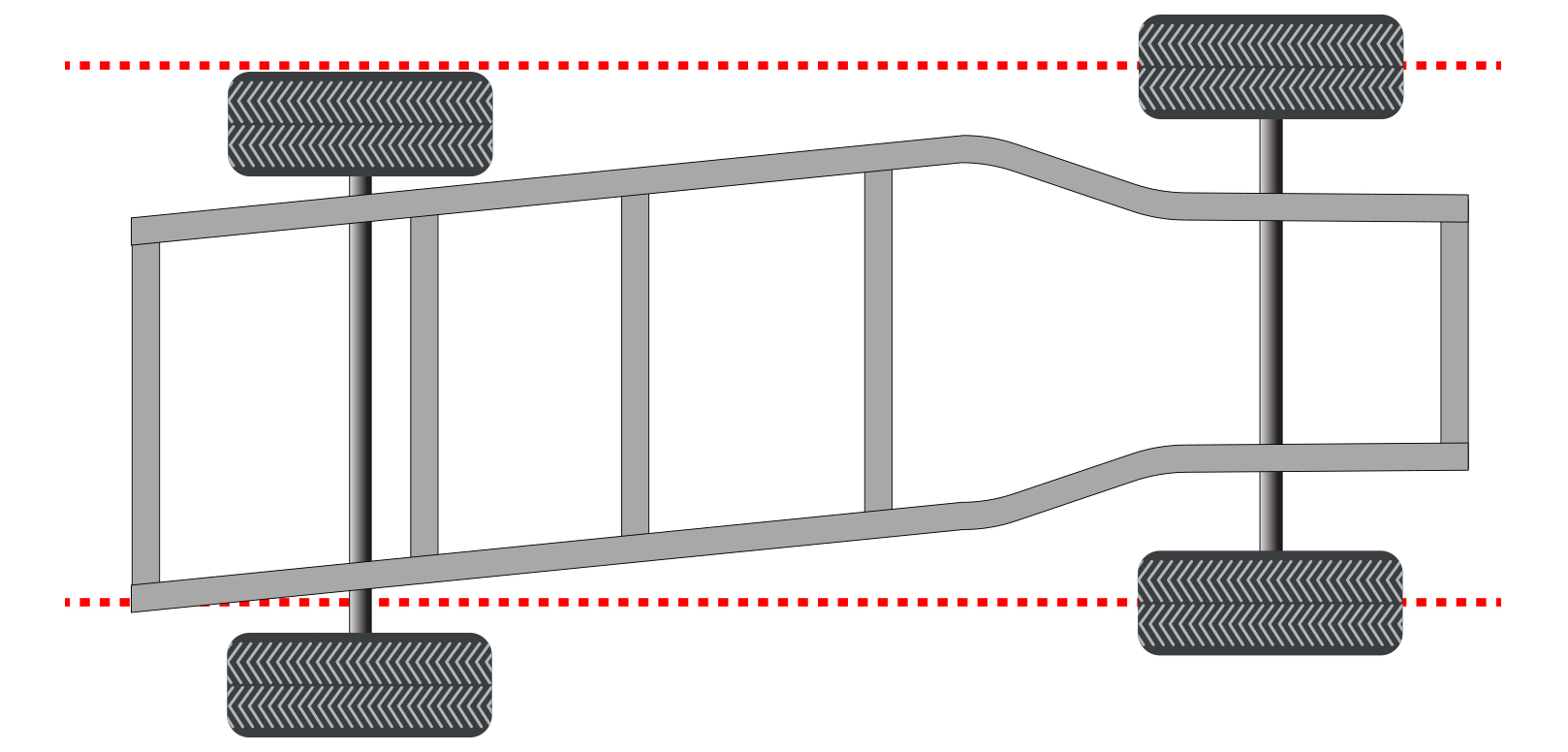
Mashed Frame Repair: A head-on or rear-end collision often results in mash frame damage, where the impact causes the frame to crumple inward on itself. This type of damage is characterized by a portion of the unibody frame being shorter than the manufacturer's specifications. Common signs of mash frame damage include distortion or wrinkles in the hood, fenders, rails, or frame horns. Unfortunately, a mashed frame can have a ripple effect, leading to damage in other areas of the vehicle.
Leaving mash damage unattended can have severe consequences, causing significant wear and tear on other vehicle components. However, for modern cars, the repair process is relatively straightforward if only one section of the vehicle is affected. In such cases, the damaged section of the frame can be replaced to restore the structural integrity of the vehicle. Timely attention to mash frame damage is crucial to prevent further complications and ensure the safety and performance of the vehicle on the road.

Sagging or Twisted Frame: Look out for gaps in the body, as uneven parts in the build of a car frame can cause sections of the vehicle to lean. If left unattended, these gaps can lead to faster tire and coil wear. Frame straighteners effectively fix minor frame damage using a leverage process.
Diamond Frame Misalignment: In a straight frame, when the center box is measured diagonally, the measurements are equal, forming a perfect square, which ensures precise mounting for the suspension. However, if one frame rail is pushed out of position, either forward or backward, the center box becomes distorted. This causes the diagonal measurement to become uneven, resembling the shape of a diamond. As a result, the suspension is affected, and frames with a diamond shape often exhibit the characteristic "dog tracking," where they appear to travel down the road at an angle. It is rare to find a pure diamond shape without other damage. Additionally, when frame rails move forward or backward, they typically deviate from being parallel to the road surface.
Sway Damage: Sway damage causes the vehicle to lean to one side, impacting steering and overall vehicle performance. Our frame straightening process corrects the sway, eliminating vibrations and ensuring a safe and comfortable ride.
Mashed Frame Repair: A head-on or rear-end collision often results in mash frame damage, where the impact causes the frame to crumple inward on itself. This type of damage is characterized by a portion of the unibody frame being shorter than the manufacturer's specifications. Common signs of mash frame damage include distortion or wrinkles in the hood, fenders, rails, or frame horns. Unfortunately, a mashed frame can have a ripple effect, leading to damage in other areas of the vehicle.
Leaving mash damage unattended can have severe consequences, causing significant wear and tear on other vehicle components. However, for modern cars, the repair process is relatively straightforward if only one section of the vehicle is affected. In such cases, the damaged section of the frame can be replaced to restore the structural integrity of the vehicle. Timely attention to mash frame damage is crucial to prevent further complications and ensure the safety and performance of the vehicle on the road.
Last edited:
Challenger RTA
Well-Known Member
Ride height.


Challenger RTA
Well-Known Member
Challenger RTA
Well-Known Member
The above is somewhat the order to check. The E body is 50 years old. That's all I have to say about that!
Talking about frame alignment. SAI Steering follows frame. Rear spring and hosing where off. just pointing out what to look for not what is wrong. pull a tape from front wheel to back wheels on both sides. More caster will or might fix it. but what is wrong?
Axle housings can become bent from impacts. If you see an axle with a difference in toe greater than .50 degrees, look at the axle for possible damage.
I gave them the specs to useDid you give them specs to use or trust them to find the specs?
I've heard of shops saying this because old cars aren't in their "toe-n-go" database. Which also highlights the fact that if they can't align it by twisting a single rod end, they may be claiming they can't get spec because it actually require analysis of what they are doing.
Try doing it yourself as Chryco suggested. Or, ask around at the next car show to see who others are using.
Katfish
Well-Known Member
Curious if they charged you for what they did.
Most places provide a print out of the results.
How does it drive, maybe just put some miles on it and check the tires.
Most places provide a print out of the results.
How does it drive, maybe just put some miles on it and check the tires.
None of the three places charged me for the time they spent. At least they treated me good in that respect. Car drives fine, drives true, BUT I just rebuilt the entire front end, all new parts and bushings, new shocks and new tires. I am sure I am not so good at setting everything perfectly. I just want to get it aligned properly without destroying brand new tires to see if it is aligned properly. I have had Ebony since day one of her life, and I just want to treat her good.Curious if they charged you for what they did.
Most places provide a print out of the results.
How does it drive, maybe just put some miles on it and check the tires.

MoparCarGuy
Well-Known Member
- Joined
- Jun 28, 2020
- Messages
- 1,097
- Reaction score
- 1,079
Ray bought his Cuda new in 1970. Original owner. No frame damage or anything strange with this Cuda.
Alignment techs of today are way too dependent on the alignment rack’s computerized database of specs. A simple Mopar suspension befuddles them. The auto tech schools are failing to teach the basics to these kids.
Alignment techs of today are way too dependent on the alignment rack’s computerized database of specs. A simple Mopar suspension befuddles them. The auto tech schools are failing to teach the basics to these kids.
Challenger RTA
Well-Known Member
Gone are the days of knowing how the tools of a trade work. If a smart phone can't fix it the newer generation will doom us. Zombies.
At times I used a string line, tape measure and levels to do an alignment. Sent it down the road and no problems.
Now there is this. You have to subscribe to it. Gyraline 4 Wheel Alignment Kit
At times I used a string line, tape measure and levels to do an alignment. Sent it down the road and no problems.
Now there is this. You have to subscribe to it. Gyraline 4 Wheel Alignment Kit
Last edited:
I gave them the specs to use
What were those specs?
I have often suggested using 2005 Mustang specs for cars with radials, because they are available in nearly any shops computer database for alignment. However, they also will not be able to hit these specs because they are more aggressive than what can be achieved with a mopar with stock upper control arms. However, while the shop will not be able to make it hit these settings, whatever they can get from it is going to be a heck of a lot better than the original specs for bias plys.
If this is what you did, then that is why they couldn't hit the spec and why it feels like it drives fine now.
Katfish
Well-Known Member
Exactly what I do, tell'em to enter 2006 Mustang.
I have aftermarket UCA so they get pretty close.
I have aftermarket UCA so they get pretty close.
Similar threads
- Replies
- 17
- Views
- 731

- Replies
- 21
- Views
- 664