
Carter AVS Idle issues
Sorry about the long post but didn’t want to waste anyone’s time suggesting things I already tried. 1970 Challenger RT 440 4 barrel with Auto and AC. LA built CA car with ECS. Using Carter AVS 4740S. EBay carb from years ago and had it rebuilt but would never idled correctly. Very erratic and with low vacuum, unless idle speed increased and ran off the transition circuit (say >1100 RPM). Bought an edelbrock 1813 800 AVS Thunder carb. Idled well right off the bat without issue.
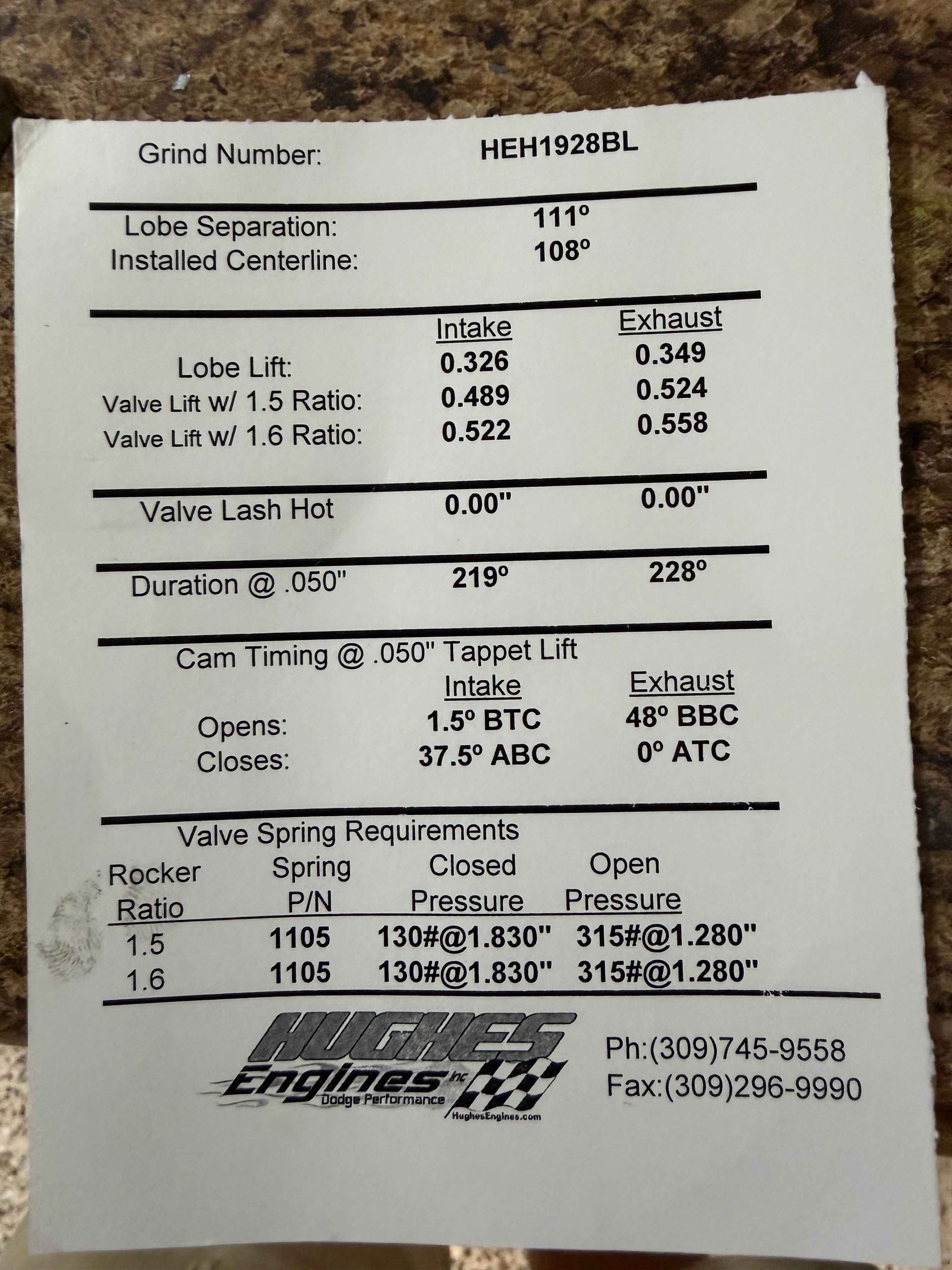
Recently pulled engine to address a few issues with the car. Checked cam timing. Confirmed centerline at 108, confirmed intake and exhaust lift, duration 219 deg, and confirmed cam timing at .050 for intake and exhaust. Valves were OK and compression OK all cylinders.
Went through the carb. Cleaned out all the passages and jets, confirmed the idle circuit passages were clear. Found out someone blocked off hot idle vent passage. Removed primary booster assembly and confirmed flow through passages. New gaskets. Floats checked for leaks and needles changed, floats set to spec. New accel pump plunger and adjusted, Everything was set to spec.
Back on car. Tried timing anywhere from 5-18 deg advanced. Some better at 15 deg so left it there. Kept vacuum advance hose clamped down. Once RPMs go above 1100 or so it runs great, but no stable idle can be found below 1000. Erratic Vacuum about 6-8 at idle. Raise idle speed above say 1050 or so and it runs well but now on transition circuit. Vacuum around 20. Seems to go from 1100 (Stable) to 750 or so (rough), but can’t get it to settle in between when adjusting idle speed. Doesn’t much matter where the idle mixture screws are unless in too far in and it stalls out. Seems to want more fuel. Partly covering the air horn with your hand speeds up the car while idling and runs smoother.
Thought perhaps vacuum leak. Checked everything I could. Changed carb manifold gasket and sprayed carb cleaner all around, made sure manifold (rear) and ported (front) vacuum passages were blocked off. Clamped off power brake booster with no noticeable changes. Heads to manifold gaskets fine.
Thought the secondary throttle shaft was a bit loose, So, reaching, drilled and placed brass fittings (3/8” primary and 5/16” secondary). Noticed someone had been through them before and probably didn’t have the throttle plates correctly aligned. Believe the primaries plates were on backwards and weren’t sealing well. Numbers facing toward the idle adjustment screws. I know they have tapered edges. Removed and were then oriented correctly, kept them loose until they “self-centered” as I opened and closed the throttle shafts. Got the best fit I could and really looked pretty good. Also checked the bottom of the carb with a straight edge.
Back on the car. Little to no improvement. At this point I am thinking this early emissions carb has an idle circuit that is just too lean for this setup. Cam has reasonably long duration but specs aren’t too crazy. Only issue is the idle. Runs great once off idle.
Read about blocking off part of the By-pass or idle bleeds in the low speed circuit, or even enlarging the low speed jet to get more/richer fuel mix at idle. Before I do anything I may regret, I wanted to throw it out there for suggestions.
Sorry about the long post but didn’t want to waste anyone’s time suggesting things I already tried. 1970 Challenger RT 440 4 barrel with Auto and AC. LA built CA car with ECS. Using Carter AVS 4740S. EBay carb from years ago and had it rebuilt but would never idled correctly. Very erratic and with low vacuum, unless idle speed increased and ran off the transition circuit (say >1100 RPM). Bought an edelbrock 1813 800 AVS Thunder carb. Idled well right off the bat without issue.
Recently pulled engine to address a few issues with the car. Checked cam timing. Confirmed centerline at 108, confirmed intake and exhaust lift, duration 219 deg, and confirmed cam timing at .050 for intake and exhaust. Valves were OK and compression OK all cylinders.
Went through the carb. Cleaned out all the passages and jets, confirmed the idle circuit passages were clear. Found out someone blocked off hot idle vent passage. Removed primary booster assembly and confirmed flow through passages. New gaskets. Floats checked for leaks and needles changed, floats set to spec. New accel pump plunger and adjusted, Everything was set to spec.
Back on car. Tried timing anywhere from 5-18 deg advanced. Some better at 15 deg so left it there. Kept vacuum advance hose clamped down. Once RPMs go above 1100 or so it runs great, but no stable idle can be found below 1000. Erratic Vacuum about 6-8 at idle. Raise idle speed above say 1050 or so and it runs well but now on transition circuit. Vacuum around 20. Seems to go from 1100 (Stable) to 750 or so (rough), but can’t get it to settle in between when adjusting idle speed. Doesn’t much matter where the idle mixture screws are unless in too far in and it stalls out. Seems to want more fuel. Partly covering the air horn with your hand speeds up the car while idling and runs smoother.
Thought perhaps vacuum leak. Checked everything I could. Changed carb manifold gasket and sprayed carb cleaner all around, made sure manifold (rear) and ported (front) vacuum passages were blocked off. Clamped off power brake booster with no noticeable changes. Heads to manifold gaskets fine.
Thought the secondary throttle shaft was a bit loose, So, reaching, drilled and placed brass fittings (3/8” primary and 5/16” secondary). Noticed someone had been through them before and probably didn’t have the throttle plates correctly aligned. Believe the primaries plates were on backwards and weren’t sealing well. Numbers facing toward the idle adjustment screws. I know they have tapered edges. Removed and were then oriented correctly, kept them loose until they “self-centered” as I opened and closed the throttle shafts. Got the best fit I could and really looked pretty good. Also checked the bottom of the carb with a straight edge.
Back on the car. Little to no improvement. At this point I am thinking this early emissions carb has an idle circuit that is just too lean for this setup. Cam has reasonably long duration but specs aren’t too crazy. Only issue is the idle. Runs great once off idle.
Read about blocking off part of the By-pass or idle bleeds in the low speed circuit, or even enlarging the low speed jet to get more/richer fuel mix at idle. Before I do anything I may regret, I wanted to throw it out there for suggestions.