
• Welcome to For E Bodies Only !

    We are a community of Plymouth Cuda and Dodge Challenger owners. Join now! Its Free!

High Radiator Temperature

Stan Pleskunas

Active Member
Joined
Oct 28, 2018
Messages
27
Reaction score
14
Location
North Wales, PA
All,

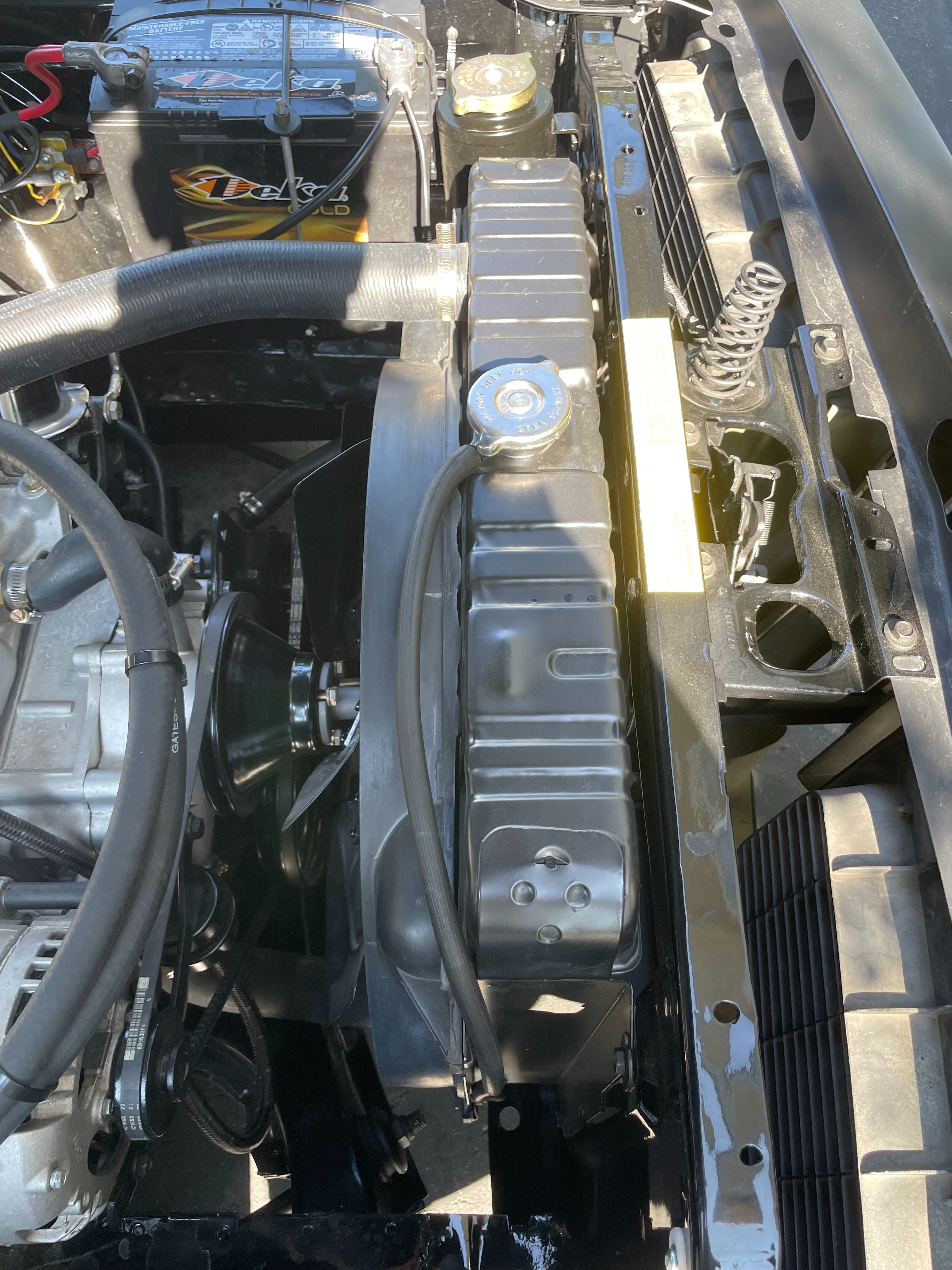
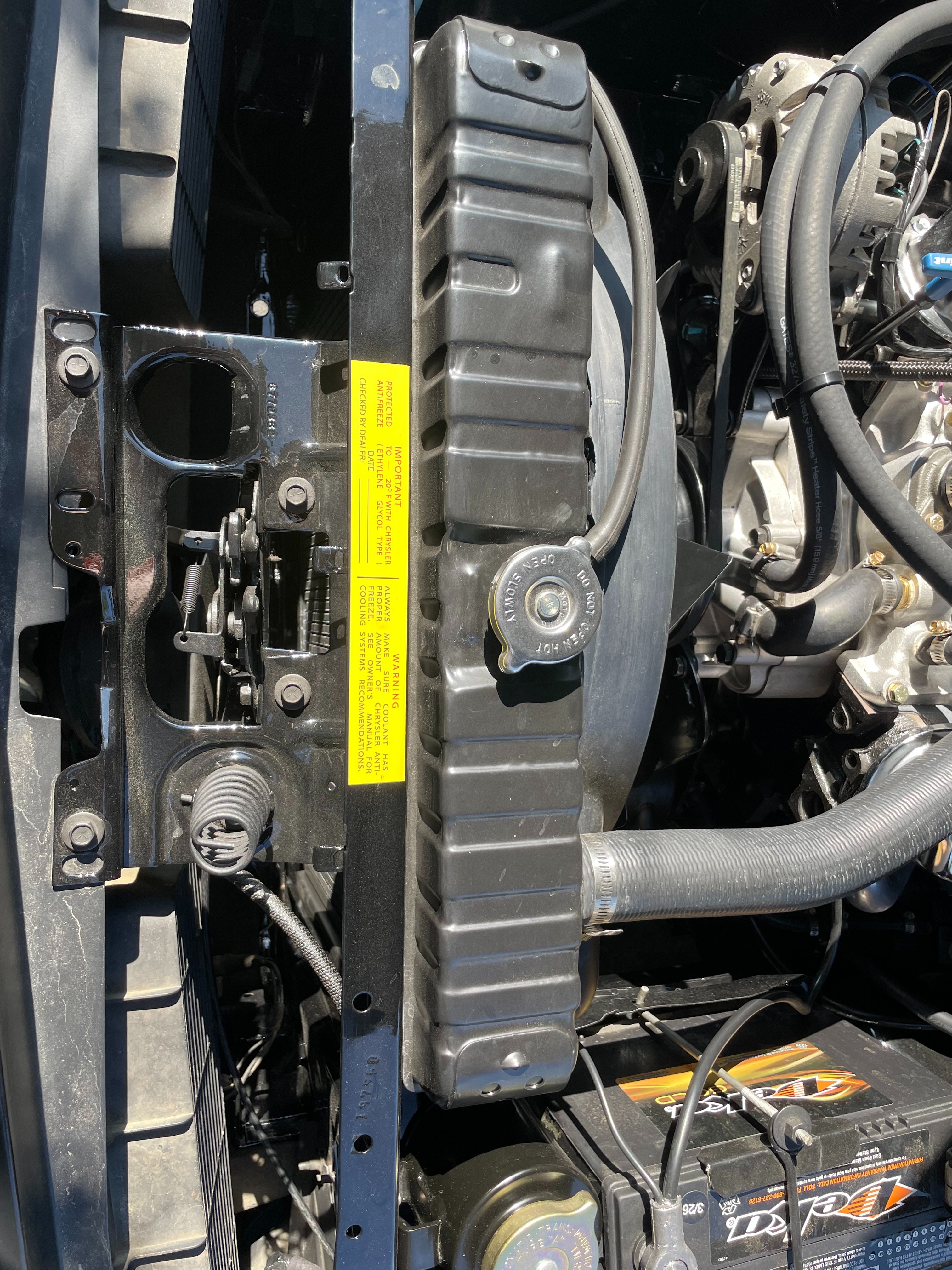
Restoration of my 1973 Plymouth Barracuda included installation of a BluePrint 408 stroker engine. Experiencing high temperatures with the existing cooling system. Radiator is 22 x 23 x 3 inches with a 3 inch shroud (see photo below). New radiator, thermostat, and fan clutch have been installed. Car typically runs up to 3/4 on the gauge in traffic. Looking for recommendations to reduce the high temperatures experienced in traffic. Considering going with dual electric fans and wanted to know a preferred vendor and model to use. Thanks in advance.
IMG_6448.jpeg


IMG_6449.jpeg
 
Are you thinking that the car is running hot because the factory gauge is running at 3/4 of the temp range? I wouldn't conclude that you have a problem based on the reading of a 50+ year old factory gauge. Next time you drive it, run it until the gauge hits the 3/4 mark, then pop the hood and take temp measurements on the rad tank with an IR thermometer to see what the temperature really is.

I recently replaced the factory temp gauge in my car and it now normally sits at 3/4, but the rad temp is always a happy 195 degrees.

I don't think that you should expect the temp needle to always sit right in the middle of the gauge range like is typical for newer cars.
 
Yes, it is important to know the actual temp. And let us know where you measure.

An old rule of thumb that has turned out to be pretty darned accurate is; if the temp climbs at slow vehicle speeds, it is usually an air flow problem. While climbing temps at faster road speeds usually indicate a water flow problem.
 
Does the temperature go the 3/4 of the gauge only in heavy traffic and then goes down in normal driving speeds? If so, everything is probably OK. Like mentioned above, it's an old 50+ year old gauge. A real temperature reading is needed to determine if it's getting too hot. Also remember water boils at 250 degrees Fahrenheit with your 16 psi pressure cap. So don't be too alarmed if you get 220 or 225 in stop and go traffic. As long as it cools down with proper airflow at normal speeds, that's the main thing.
 
Also IR Thermometers measure the surface temp, not what the temp inside is. One other thing, the surface can affect the temp measurement too. A highly polished surface (chrome) will show a completely different temp than a dull surface.
 
A good 5 or 7 blade clutch fan & shroud is more effective than an electric fan set up if it runs hot in traffic you need more airflow , on the highway the fan can block airflow , 180* or 195* T stat is a must .
Fuel mix & timing can also affect heat , richer mix & advanced timing run cooler , retarded timing & lean run hotter
 
The fan needs to be about 50% in the shroud to pull maximum air. The picture looks like your fan is not quite there. If you have room you could install a spacer to move the fan closer to the radiator. Low speed cooling is often lack of airflow through the radiator. I have the Blueprint 408 in my 70 Duster. I replaced the 22" radiator with a 26" and went with dual Contour electric fans & dakota digital fan controller. That combo works well for me in this car. I also had a BP 408 in another 70 Duster that used a mech fan & Hayden 2947 clutch w/shroud like you have. On that car I installed a Flowkooler high flow water pump with a Stewart Components high flow 180 thermostat and it ran fine with that combo. That car was using a 7 blade A/C fan from a mid 70's A/C car & had a pretty steep blade pitch which most aftermarket fans don't. That blade pitch pulled a LOT of air... which I believe was the key.
 
Back
Top